
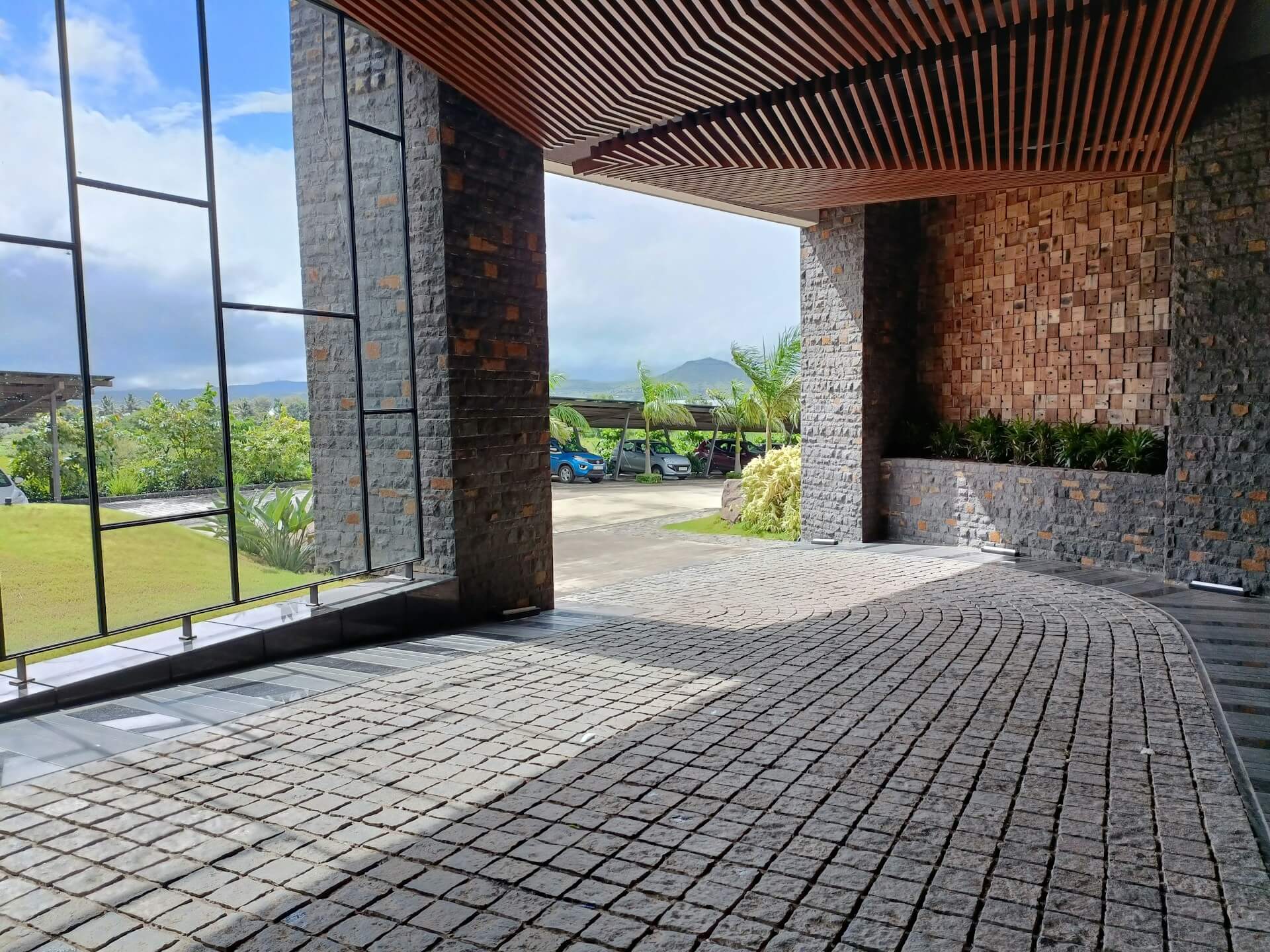
If you have recently walked outside and noticed a dip where your car usually sits, you are not alone. Many homeowners across the North East find themselves asking the same question after a spell of heavy rain or a particularly cold winter. Why is my driveway sinking, and is it something serious?
The truth is, a sinking driveway is rarely random. It is usually the result of what is happening beneath the surface rather than on top of it. At Newcastle Paving, we regularly inspect driveways that look like they are failing, only to find that the issue is entirely fixable once properly diagnosed.
In this detailed guide, I will explain the real reasons driveways sink, how to tell whether yours needs repair or replacement, and what you can do to prevent the problem returning in the future.
What Does It Actually Mean When a Driveway Is Sinking?
When a driveway sinks, the surface drops because the support underneath has shifted or weakened. The visible dip is simply the final stage of a structural issue that has been developing over time.
Driveways are layered systems. Beneath the surface material, whether that is block paving, tarmac, resin or concrete, sits a sub-base made of compacted aggregate. Under that lies the natural ground.
If any of those layers move, erode or compress unevenly, the top layer follows.
The Most Common Reasons Why Driveways Sink
There are several predictable causes of driveway subsidence. Most problems can be traced back to one or more of the following.
Poor Installation and Inadequate Excavation
The number one cause of a sinking driveway is poor ground preparation at the time of installation. If the contractor did not excavate deeply enough or compact the sub-base properly, the ground beneath will settle under weight.
Driveways need to support vehicles weighing well over a tonne. If the foundation is too shallow or uneven, it cannot distribute that load effectively.
This is often the case when a driveway was installed cheaply or very quickly.
Insufficient Sub-Base Depth
Even if excavation was carried out, the sub-base itself may not have been thick enough. A thin sub-base will compress gradually over time, particularly in areas where vehicles are parked repeatedly.
You may notice that the sinking is localised in one section rather than across the entire surface. That usually indicates concentrated load stress combined with a weak base.
Water Ingress and Drainage Problems
Water is one of the biggest threats to driveway stability. If water cannot drain away efficiently, it seeps into the sub-base and softens the materials beneath.
Over time, this leads to erosion or voids forming under the driveway. The result is gradual sinking that often becomes more noticeable after heavy rainfall.
In Newcastle, where rainfall is frequent and winters can be harsh, poor drainage accelerates this process significantly.
Clay Soil Expansion and Contraction
Certain areas are built on clay-heavy soil, which reacts dramatically to moisture changes. Clay expands when wet and shrinks when dry.
This movement puts pressure on the driveway above. If the installation did not account for soil conditions, cracking and sinking can follow.
Local knowledge is essential when designing driveways in areas prone to soil movement.
Heavy Vehicles and Repeated Stress
Driveways designed for standard cars can struggle under heavier vehicles such as vans, motorhomes or commercial vehicles. Repeated parking in the same position increases pressure on one specific point.
Over time, the ground beneath that area compresses more than the surrounding sections. This results in noticeable dips or depressions.
Tree Roots and External Disturbances
Large trees near driveways can influence ground stability. Roots may displace soil or create voids that lead to uneven settlement.
Construction work nearby can also disturb ground conditions, particularly if excavation changes natural drainage patterns.
Does the Surface Type Affect Sinking?
Every surface type can sink if the foundation fails. However, the way the sinking appears varies depending on the material.
Block paving often shows individual blocks dipping or rocking. Tarmac may develop depressions or shallow rutting. Concrete surfaces can crack and drop in sections.
The material itself is rarely the root cause. The problem almost always lies beneath it.
Early Warning Signs to Watch For
Spotting early symptoms can save significant repair costs.
Look out for water pooling in specific areas, uneven edges, cracks widening over time or blocks beginning to move underfoot. If the driveway feels unstable when you walk across it, the sub-base may already be compromised.
Addressing minor dips quickly prevents them from becoming larger structural problems.
Is a Sinking Driveway a Structural Risk?
In many cases, the issue is limited to the driveway itself. However, severe sinking near a property entrance or garage can redirect water towards the building.
Uneven surfaces also create trip hazards and increase the risk of slipping in winter when water freezes in dips.
The longer the problem is left unresolved, the greater the chance of secondary damage.
How Professionals Diagnose a Sinking Driveway
A proper diagnosis goes beyond surface inspection.
At Newcastle Paving, we assess the extent of the sinking, check drainage patterns and examine edge restraints. In some cases, we lift a small section to inspect the sub-base condition directly.
This allows us to identify whether the issue is localised or widespread.
Understanding the cause determines the correct repair strategy.
Repair Options for a Sinking Driveway
The right solution depends entirely on what is causing the movement.
Localised Lift and Rebuild
For block paving, affected areas can be lifted carefully. The compromised sub-base is removed and replaced with fresh, compacted aggregate.
The blocks are then relaid and re-sanded properly. When done correctly, the repair blends seamlessly with the rest of the driveway.
Tarmac Sectional Repairs
For tarmac driveways, the sunken area is cut out cleanly. The base is rebuilt and compacted before new tarmac is applied.
Simply filling the dip without rebuilding the base will not prevent the issue returning.
Drainage Improvements
If water is contributing to the problem, installing channel drains or adjusting the fall of the driveway can protect it long term.
Proper drainage ensures the sub-base remains stable and dry.
Full Reconstruction
If sinking affects most of the surface, a full excavation and rebuild may be required. While this is a larger investment, it eliminates recurring problems.
A comprehensive rebuild ensures the driveway meets modern installation standards.
How Much Does It Cost to Fix a Sinking Driveway?
Costs vary depending on the size of the affected area and the depth of repair required.
Small localised repairs are typically affordable and completed within a short timeframe. Larger structural issues requiring extensive excavation naturally involve higher costs.
The key factor is acting early. Minor repairs are far less expensive than full reconstruction.
Can You Prevent a Driveway from Sinking?
Yes, prevention begins with proper design and installation.
Adequate excavation depth, quality sub-base materials and thorough compaction are essential. Drainage must be integrated into the design rather than treated as an afterthought.
Routine maintenance also plays a role. Keeping drains clear and addressing minor cracks early helps preserve structural integrity.
Avoiding repeated heavy loads in the exact same position can reduce stress on one area.
Why Local Experience Matters
Newcastle’s climate presents unique challenges. Frequent rainfall, occasional frost and variable soil types all influence driveway performance.
At Newcastle Paving, we design installations specifically for North East conditions. Local knowledge allows us to anticipate potential issues and build accordingly.
Understanding why your driveway is sinking requires familiarity with these environmental factors.
When Should You Take Action?
If you are asking why is my driveway sinking, it is worth arranging an assessment sooner rather than later.
Driveways rarely stabilise on their own. Continued vehicle use usually worsens the dip over time.
Early intervention protects both your investment and the appearance of your property.
Final Thoughts on Why Driveways Sink
A sinking driveway is almost always a sign of foundation weakness, drainage problems or repeated load stress. The visible dip is simply the symptom of something happening below the surface.
The good news is that most issues can be resolved effectively when diagnosed correctly. Whether the solution is localised repair, drainage improvement or full reconstruction, addressing the root cause is essential.
If your driveway has started to dip, pool water or feel uneven, taking action now will prevent more serious structural damage later. A properly constructed driveway should last decades, and with the right repairs, yours can too.
Get A Quick Quote
Please provide your contact details here and we’ll get back to you shortly with a quote. We aim to respond to all quote requests in 24 hours.